Cuneo Civic Museum - The Lombards of Sant'Albano Stura
An exceptional archaeological find
Since October 2016, a selection of the best-preserved grave goods (7 male and 7 female) from the Lombard period have been on display in the Hall on the first floor. These were found during the archaeological excavations conducted in the Ceriolo district of Sant'Albano Stura between 2009 and 2011: this is the largest Lombard necropolis in Italy and one of the largest in Europe.
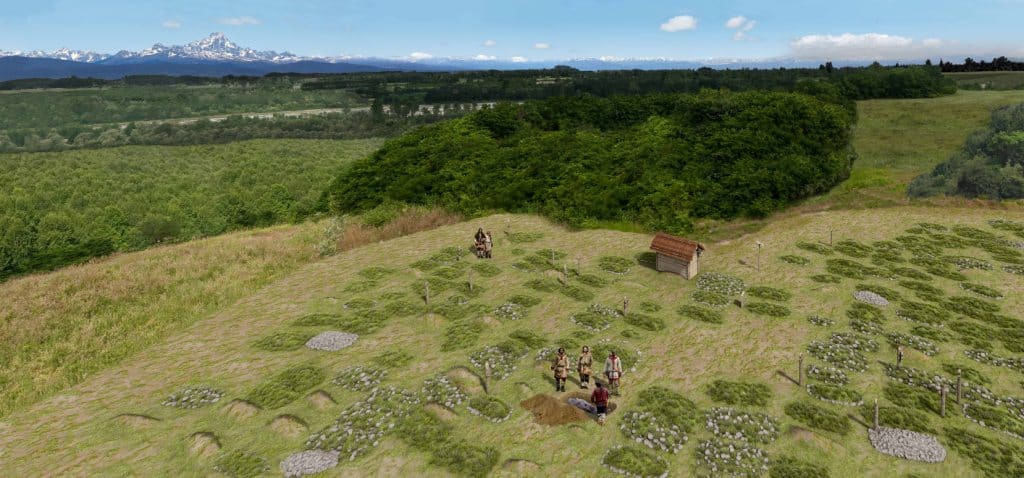
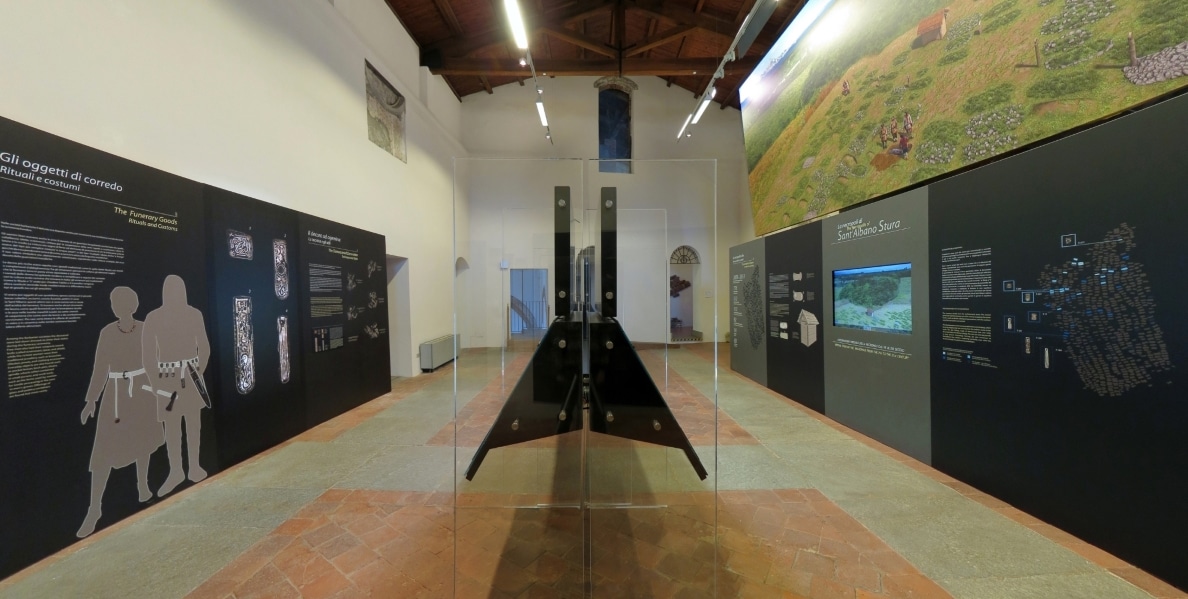
Under the scientific direction of the Superintendency of Archaeology, Fine Arts and Landscape for the Provinces of Alessandria, Asti and Cuneo and thanks to resources from the municipality and the Fondazione Casa di Risparmio di Cuneo, the exhibition space has been renovated with an original, innovative layout, inclusive of new museum audiences and in step with the latest technologies, with films, blow-ups of the reconstruction of the necropolis set in the 7th century AD (photo 1), and tactile reproductions, some large, of the archaeological excavation and the fabrics used at the time. There are also 3D reproductions of the most significant objects created using laser scanning technology (photo 2).
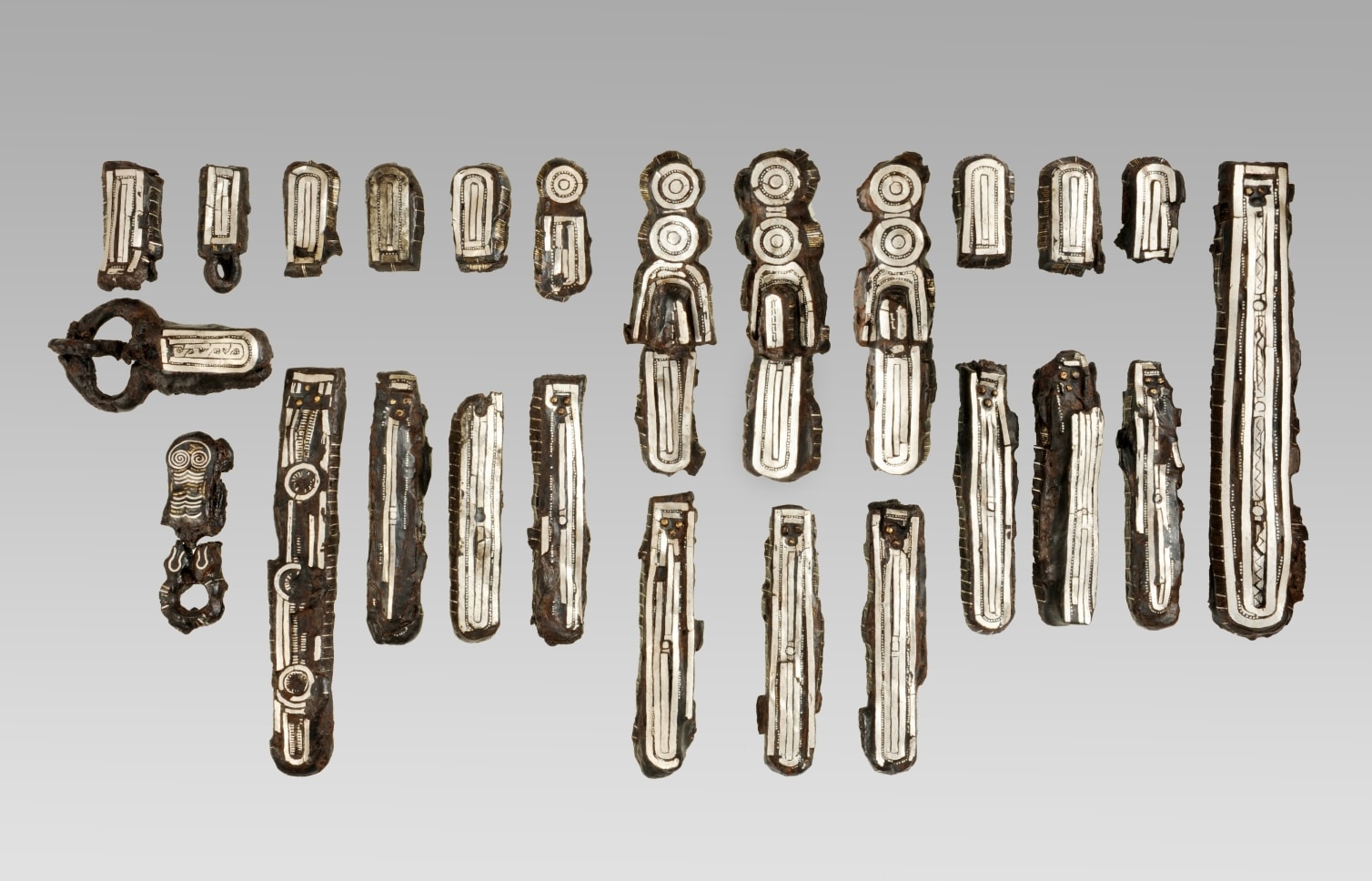
Among the men's grave goods on display, many feature belts for suspending iron weapons with intaglio decoration (photo 3). In the intaglio decorations that embellished the belts, the motifs (animalistic motifs were very common) were drawn using silver and brass wire inserted into the incisions on the support and then hammered; they were often also surrounded by larger silver plates, which created a plating effect.
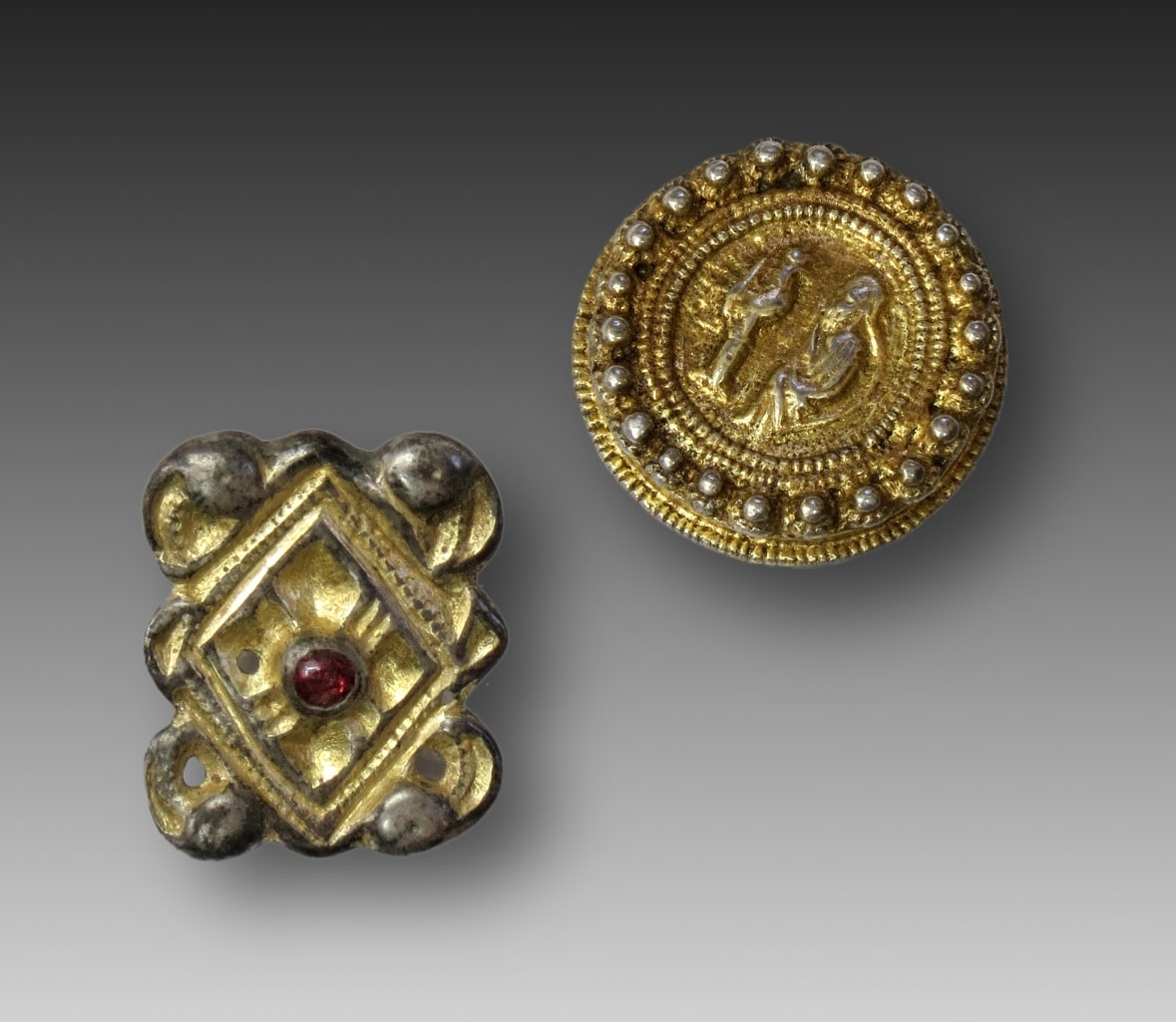
Among the female adornments, particularly significant are the grave goods that demonstrate the evolution of customs following contact with the late Roman culture that the Lombards encountered in Italy. The woman from tomb 563, for example, whose grave goods are on display at the Cuneo museum, wore two small fibulae (brooches), worn in pairs on the upper part of her torso (photo 4). One is a gilded silver fibula, decorated at the ends with small birds of prey heads and in the center with an almandine (garnet), whose workmanship and decoration hark back to the transalpine world. The second fibula, on the other hand, is attributable to Mediterranean Christian culture, with a more naturalistic style: it depicts Saint Peter, seated with his legs bent and his face in three-quarters (perhaps veiled). In front of him is a rooster on a pedestal.