
Cuneo Civic Library - History
The Departmental Library, then the Civic Library
by Carlotta Aimale
Not everyone knows that the Cuneo Civic Library has given the city a special distinction: it is, in fact, the oldest of Piedmont's civic libraries. The first documents relating to its establishment date back to 1802, with its opening in 1803, when Cuneo, under French rule, was the capital of the Stura Department.
The library essentially arose as a consequence of the confiscation of rich libraries from the suppression of monastic orders by decree of the French government. Due to the destruction of the catalogue – which occurred in 1811 in a fire – we have no certain information on this original collection; from an 1866 report by librarian Maccario, we know that six thousand volumes were confiscated, but it is also said that many books and manuscripts were stolen or lost during the transition…
For a few years there was a "de facto librarian", Vittorio Bunico, with the task of visiting and sealing the libraries of the convents belonging to the Department, that is, of Cuneo, Saluzzo, Fossano, Mondovì, Alba, Oneglia and their respective surrounding areas.
When, in 1806, the library changed from departmental to civic – since the prefect of the Department had realized that it had its costs… – Monsignor Giovanni Vincenzo Lovera De Maria was appointed librarian, with a salary of 600 lire per year (the maximum salary for a professor was, at that time, 855 lire per year).
With the return of the Savoy family, De Maria requested and was granted assistance by the Reverend Vincenzo Sorzana, "the only one capable of satisfying the public, having been in charge of all the works for several years." This was a highly unusual appointment, considering that De Maria gave up half his salary to give it to his deputy, obtaining the latter's "survival, provided the public was fully satisfied." And so it was. The position then passed to Canon Ignazio Brignone, assisted by the Reverend Giovanni Sorzana, nephew of the previous librarian. Both held the position until their deaths, and in 1858 Cuneo had its first lay librarian: Lorenzo Bertano.
The choice was no coincidence: the City Council appointed him for his talents as a great scholar of local history. From the reports we have received, it appears that he was also an excellent librarian, farsighted and with decidedly modern ideas. For example, as soon as he took office, he proposed to the Administration that they change their purchasing policy: instead of using the meager funds available to satisfy the needs of a few scholars, he opted to purchase works of universal utility, having realized that the most assiduous and faithful patrons were, then as now, students. Furthermore, as a cultured and passionate scholar, he took care to pay particular attention to local history in his purchases, thus making the library "a jealous custodian of every little thing of interest to its city," without neglecting other areas, since the library was "at least half a century behind scientific progress.".
The few years he served as librarian himself, before handing over the position to Maestro Sebastiano Maccario, while maintaining his supervision, transformed the library from a mere repository of books to a place for the organized collection of documents, thanks in part to Maccario's precision and expertise in compiling catalogs and reports. It was fortunate, therefore, for the city that two of its best librarians held the position for over thirty years.
With the new century, the librarian also changed, although he wasn't exactly new: Vincenzo Abre, assistant librarian for seventeen years, had an excellent memory, but was certainly not a jovial character, so much so that he was described in a local newspaper as having "a musketeer-style goatee, an oblong face, parchment-like skin, and a terribly austere look; a true bogeyman for newbies who would pluck up courage to approach him...". If nothing else, he publicized the library, as the local press took an interest in his story more than once (the story of his retirement is curious, with a series of back-and-forth letters appearing in Sentinella delle Alpi and Lo Stendardo entitled "The true story of my retirement").
Dark years followed for the library. Although it was clear to all administrators that the librarian's choice should not be a casual one, as he or she had to effectively oversee the entire management of the institution, for practical and economic reasons, a highly negligent librarian was appointed, as evidenced by both the documents discovered and the harsh newspaper reviews of the time.
The first female librarian in the history of the Cuneo civic library, Graziella Romano, better known as Lalla Romano, proved to be of a completely different caliber. Unfortunately, her tenure lasted only three years, from 1932 to 1935, after which she requested and was granted resignation for family reasons. During this time, Romano earned the praise of the Bibliographic Superintendent of Piedmont for contributing, with an essay on a local topic, to a study on Piedmontese bibliography undertaken by the Superintendency.
Immediately before and during the Second World War, one can speak of the library's survival rather than its active existence. A positive note, however, is that it was not closed, except briefly, at least allowing the existing collections to be used.
The library, as we understand it today, can be said to have been born in Cuneo with Piero Camilla, the ideal successor to Lorenzo Bertano, also a learned and passionate historian to whom we owe so much, both for his studies of local history and for the construction not only of a modern library, that of Cuneo, but also of the entire Library System of the Cuneo Valleys, today in recovery.
The history of the library is also a history of spaces, often poorly located, cramped, dark, or inadequate. Starting from its initial location, in the sacristy of the Convent of San Francesco (the report of the architect in charge of the renovation has been preserved), it was soon followed by its move to the premises of the Convent of Santa Chiara. Here, the library consisted of a single room accessed via a corridor that served as an "entrance vestibule," entirely filled with shelves and books, a tool shed, and a "firewood" for heating the librarian's office, located at the end of the corridor.
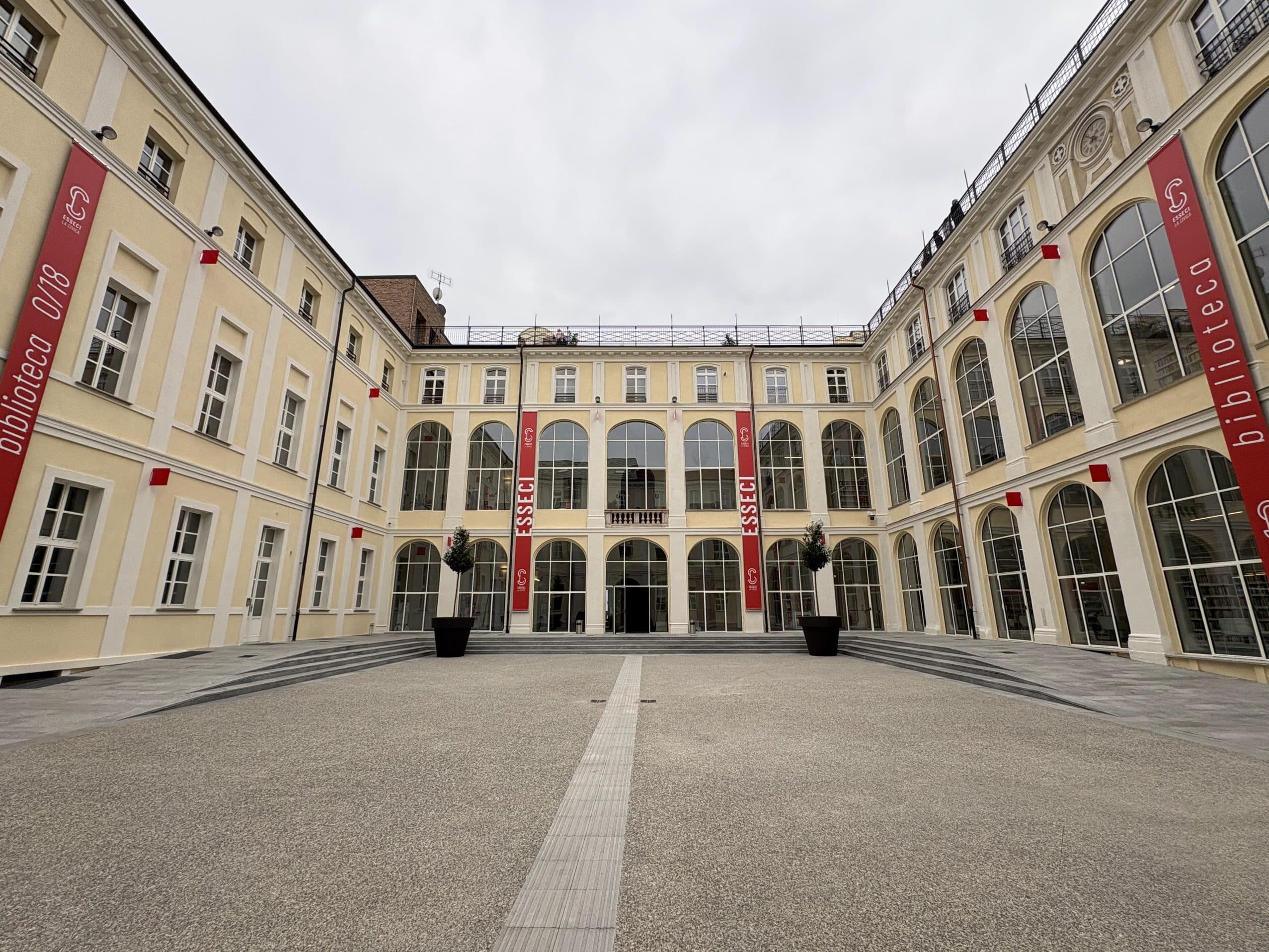
In 1824, the library was moved to the top floor of the Town Hall, where it remained for over a hundred years. However, proposals for a change date back to 1850, and were only considered in 1928, despite local news reporting the library's unsuitability for such a location, describing it as "perched in an immense attic room, with prehistoric bookshelves, church balustrades, and worm-eaten furniture, creaking from every joint in the wood..." In 1928, the long-awaited move to Palazzo Audiffredi, its current location, took place.

To gain an idea of how library access actually worked, it's interesting to consult the surviving regulations. The first dates back to 1821: of note is the strict prohibition on removing books without special permission from the Administration; it was also the librarian's duty to censor books "contrary to religion, morality, and the Government." Home lending was only permitted in 1873, albeit with very strict rules; the hours in 1821 were Monday, Thursday, and Saturday from 9:00 am to 12:00 pm, and on Thursdays also from 3:00 pm to 4:00 pm; from 1857, it was open every working day for five and a half hours. An interesting fact: in 1923, the hours included one hour in the morning, two in the afternoon, and also two hours in the evening, between 8:00 pm and 10:00 pm. The rest is history, and, we hope, of a future filled with services suited to the rapid development of information.