The exhibition "Roald Dahl & Quentin Blake. A Splendid Collaboration" opens to the public in Cuneo on Friday, October 2nd at 5:00 p.m. The exhibition, promoted by CRC Innova and conceived and curated by the cultural association CUADRI ETS in collaboration with the Roald Dahl Museum and Story Centre in Great Missenden and Quentin Blake himself, will open to the public in Cuneo
The exhibition, which will be open to the public until April 25, 2027, traces the history of a collaboration that began by chance fifty years ago with a handshake in a publisher's office and grew, book after book, to become one of the most recognizable collaborations in children's literature internationally. Admission is free.
The exhibition will be open to visitors at the Innovation Space, at Via Roma 17 in Cuneo, from Tuesday to Friday from 3:30 pm to 7:30 pm, and on Saturdays and Sundays from 9:00 am to 1:00 pm and from 2:00 pm to 7:30 pm.
The exhibition itinerary
The exhibition offers visitors an immersive experience with installations and life-size reproductions, videos that allow for encounters with the authors, two original illustrations by Blake, rare first editions of books that marked the collaboration between the writer and illustrator, in-depth texts and curiosities that offer diverse reading levels for different audiences. The exhibition features many interactive elements with digital apps, sensory corners for experiences accessible to all, reading nooks, and a large drawing table where children of all ages can nurture the great artist within them.
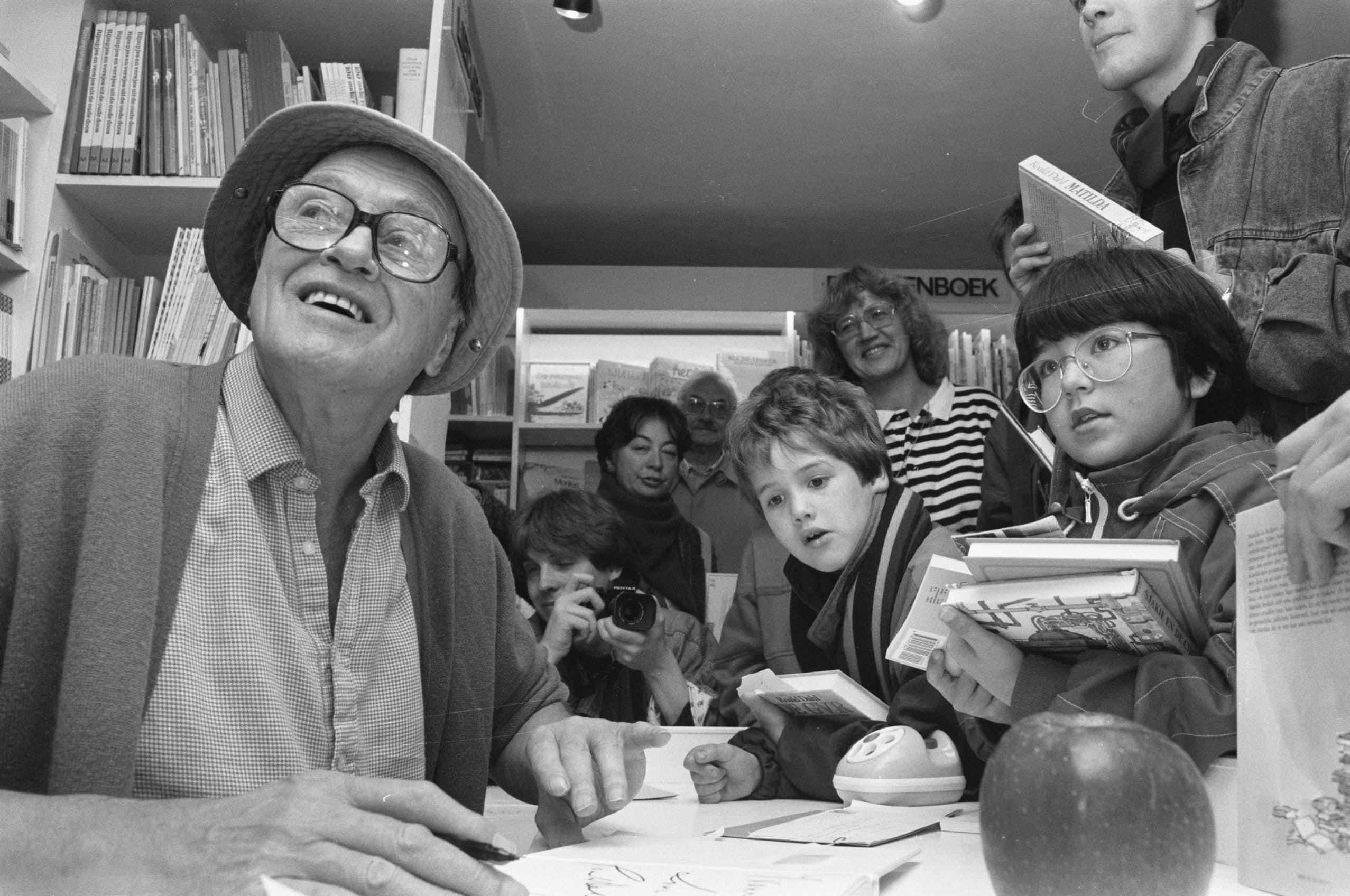
Roald Dahl is among the most beloved authors of twentieth-century children's literature. With his irreverent humor, linguistic invention, and ability to see the world from a child's perspective, he created stories and characters that have become part of the imagination of generations of readers, from Charlie and the Chocolate Factory to Matilda, from The BFG to The Witches.
Quentin Blake, one of the most celebrated contemporary British illustrators, made a decisive contribution to giving that universe a face. His rapid, ironic, and seemingly spontaneous style became inseparable from Dahl's texts, in a dialogue between word and image that accompanied some of his most celebrated books.